By Cheryl Ashton, Marketing Coordinator, TSG UK
Few industries experience economic and regulatory change as sharply as road transport. For decades, diesel has powered the UK’s haulage sector, enabling fleets to move goods efficiently between ports, warehouses, factories, retailers and distribution centres. It has been a dependable constant in an industry shaped by tight schedules, demanding customers and narrow profit margins.
Today, operators face a very different set of challenges. Fluctuating diesel prices make costs harder to anticipate. Meanwhile, customers have begun to take note of a company’s environmental impact and that of its suppliers.
With these pressures mounting, many fleet operators have shifted focus from daily operational struggles to considering what changes may be required as transport continues to evolve. While the pace of change will vary from one business to another, electricity is set to play a key role in commercial transport.
For many operators, the attention is shifting from viewing electrification as a distant concern to addressing the practicalities of preparing for it. Fleet change is only part of the process, and initiating an immediate vehicle-replacement programme is unnecessary. Understanding power requirements, charging needs and infrastructure demands is equally important for a successful transition.

The Diesel Dilemma
Rising costs and changing regulations are commonplace in the haulage industry, but many operators feel the pressure is increasing. Diesel remains one of the highest costs on the balance sheet and even a small rise at the pump can impact a large fleet. For businesses running hundreds of vehicles, fuel spend can increase rapidly, making budgets hard to manage.
Clean Air Zones and Ultra Low Emission Zones are in effect in major towns and cities, forcing operators to make lengthy detours to avoid daily non-compliance charges that vary in severity. At the same time, customers are asking more questions about emissions and the steps transport providers are taking to reduce them.

Additionally, customers, suppliers and procurement teams are placing great emphasis on environmental performance. Manufacturers, retailers and distribution centres are under pressure to reduce their own carbon footprint and carefully consider the environmental performance of the businesses they buy from and work with. As a result, the ability to demonstrate a clear plan for reducing emissions is becoming a valuable differentiator when competing for new business.
None of this diminishes the vital role diesel continues to play within the haulage sector today. Modern logistics networks have long depended on diesel-powered vehicles and many fleets will rely on them for years to come. However, more operators are contemplating how electric vehicles could fit into their existing fleet activities.

Why Fleet Operators are Looking at the Numbers
Every significant investment within a transport business must demonstrate operational and commercial value. Vehicle performance, maintenance requirements, route planning, fuel expenditure and life-cycle running costs all influence decision-making.
When assessing electric vehicles, operators are often less interested in the technology itself and more focused on the numbers behind it. Fuel costs remain volatile, while electricity can provide greater pricing stability. With fewer moving parts than conventional vehicles, EVs may also require less maintenance over their working life.
Practical advantages include recharging commercial vehicles overnight, when the depot is closed, and being ready for service first thing the next day. By charging vehicles on site, operators gain greater control over their energy strategy and are less dependent on external refuelling stations.

Preparing for electric vehicles can also help businesses to respond to changes already happening in the transport sector. Operators that start planning early will retain the flexibility to adapt to changing customer expectations and operating requirements.
That does not mean rushing into major investment decisions. Fleet operators are right to be cautious when committing significant capital to new vehicles and infrastructure, particularly as margins are tight and operational uptime is paramount.

Why Power Should Be the First Conversation
Preparing for electrification does not start with vehicle selection or choosing charge points. In many cases, the most important conversations centre on something far more fundamental: ensuring sufficient power is available to support future charging infrastructure.
Power is often overlooked in early planning, yet securing sufficient electrical capacity can be one of the biggest challenges affecting the charge project’s success and timescales. An organisation may identify the ideal vehicles and select suitable charging equipment, but without adequate power entering the site, those plans can quickly stall.
Demand for electricity is rising across the UK, with logistics hubs, data centres, manufacturers and commercial developments all competing for available network capacity. As a result, securing additional power can take longer than many businesses expect, making early planning essential.
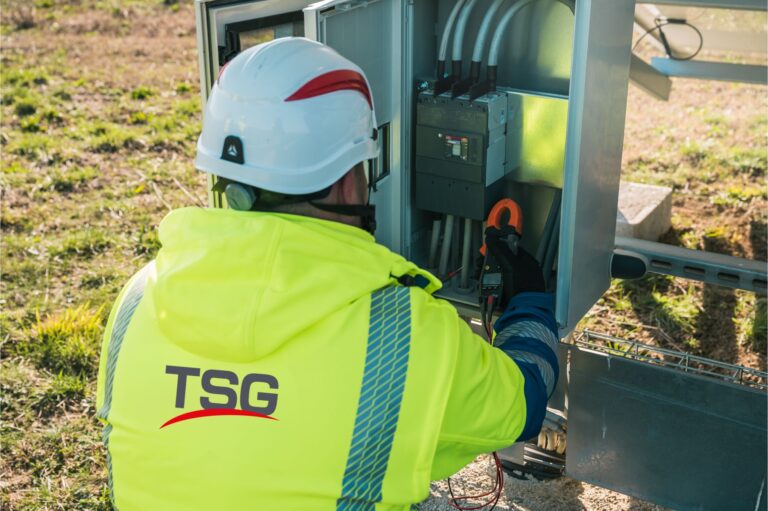
Understanding a site’s existing electrical capacity helps operators assess charging requirements, fleet expansion plans and future infrastructure needs. It also helps identify potential constraints early, reducing the risk of costly surprises later.
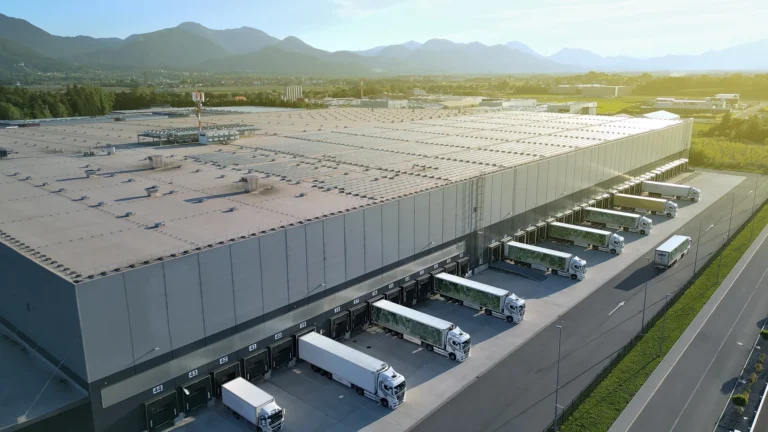
Larger depots with high-powered charging installations often require additional electrical capacity, which may involve upgrading an existing connection or applying for a new supply.
At this stage, experienced Independent Connection Providers (ICPs) can provide practical guidance and help businesses navigate what can often seem like a complicated process.
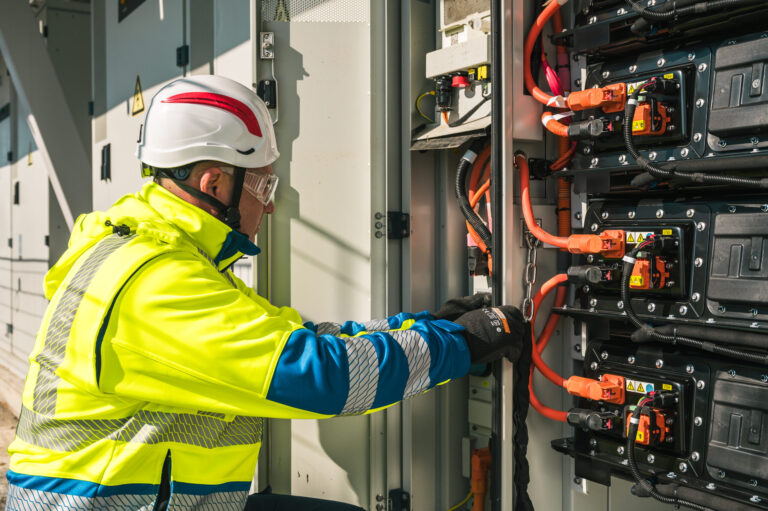
Working alongside Distribution Network Operators (DNOs), National Electricity Registration Scheme (NERS) accredited ICPs deliver the contestable elements of new or upgraded grid connections. An ICP helps businesses manage every stage of the connection, from initial design and planning to civil engineering works, cable installation, testing and energisation.
As a NERS-accredited ICP, TSG Power UK helps operators secure the electrical infrastructure needed to accommodate fleet expansion. By engaging early, businesses can understand the available options, the likely timescale and the most effective route to securing the power required for electrification.
Charging That Fits the Fleet
Once the foundations have been defined and the power requirements understood, attention can turn to the charging infrastructure itself. Because no two fleet operations are identical, charging must match operational realities rather than follow a standardised model.
A regional distribution business returning vehicles to a depot every evening will have very different charging requirements from a national haulage company operating around the clock. Route lengths, vehicle wait times, fleet size and depot expansion plans all determine the most effective charging solution. Rather than selecting chargers first and adapting operations around them, businesses should develop infrastructure that reflects how their fleets actually operate.
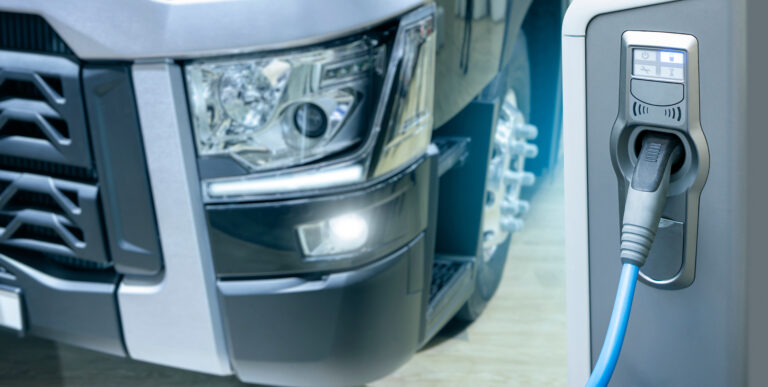
As electric heavy-goods vehicles (HGVs) continue to evolve, charging technologies are advancing in parallel. High-power direct current (DC) chargers can deliver the energy eHGVs need, while intelligent charging systems can distribute available power efficiently across multiple chargers.
Because the transition to electric transport is unlikely to happen overnight, many hauliers will introduce replacement vehicles gradually, as part of a phased approach. Therefore, the charging infrastructure should account for additional vehicles, chargers and power demand in the long term. A well-planned charging strategy can avoid unnecessary expenditure today while ensuring the depot remains ready to support future expansion.
Fleet operators already face enough operational challenges without adding further complexity. The most effective charging solutions often fit naturally into daily routines, supporting productivity rather than disrupting it.
Turning Investment into Opportunity
While many fleet operators view charging infrastructure primarily as a necessary investment to support electric vehicle adoption, others are turning that investment into a revenue opportunity.
Unlike on-site fuel pumps, chargers do not need to remain exclusive to the company’s fleet vehicles. When EVs are on the road completing deliveries, attending customer sites or travelling between depots, chargers may sit unused for long periods. Opening those charging points to other users can help operators utilise their infrastructure throughout the day.
As demand for commercial vehicle charging grows, depot owners may be able to provide access to suitable third parties, including last-mile delivery operators, local service fleets, taxis and other electric CV users.
Of course, opening charging infrastructure to external users requires careful planning. This includes assessing site layout, vehicle movements, security considerations and available power capacity, while prioritising fleet operations.

Protecting the Investment
Installing charging infrastructure is only the start, and for fleet operators, reliability is not a luxury. Vehicles must be ready to leave the depot as required, and charging equipment needs to perform consistently. Unexpected downtime can disrupt operations and reduce productivity, so ongoing service and maintenance are essential from the outset.
A proactive Planned Preventative Maintenance (PPM) programme helps identify potential issues before they become a problem. Regular inspections, testing and servicing improve charger reliability, support safety compliance and help maximise equipment lifespan.
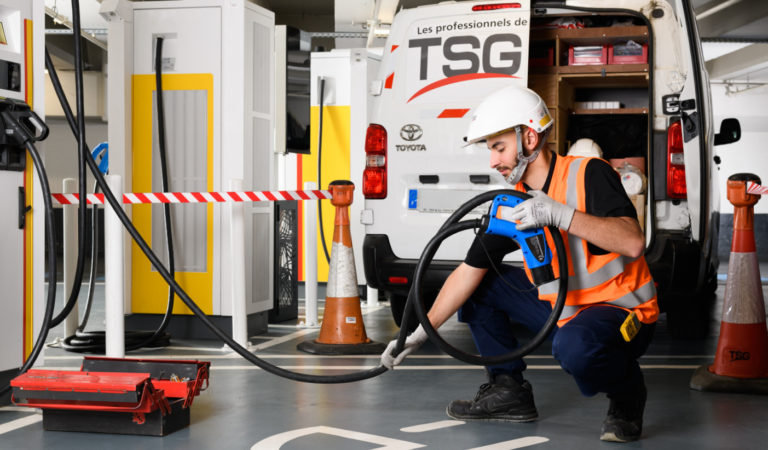
As fleets become increasingly reliant on charging infrastructure, keeping chargers operational becomes just as important as keeping vehicles on the road. Unlike conventional vehicles that can refuel at multiple locations, electric fleets depend on reliable depot charging equipment.
TSG supports operators with service and maintenance programmes that help keep chargers operational through planned inspections, technical support and responsive engineering services.
Building with Confidence
The move towards electric transport will not happen at the same pace for every operator. Some businesses are already introducing electric vehicles, while others are still weighing up the costs, infrastructure requirements and operational implications. What matters is having a plan and understanding which options are right for the business.
For many operators, the first challenge will not be choosing a vehicle or a charger. It will be determining how much power they need, what capacity the depot needs and what future infrastructure may be required. Businesses that ask those questions early are likely to have more options when it’s time to electrify.
With expertise spanning ICP services, EV charging infrastructure and ongoing maintenance, TSG supports fleet operators throughout the electrification process.
The most successful projects begin with a clear view of power requirements and the infrastructure needed to support the fleet.