The Strategic Role of Forecourt Lighting
By Cheryl Ashton, Marketing Coordinator, TSG UK
Modern lighting shapes how customers experience a forecourt long before they reach the pump. This article examines why illumination deserves renewed focus.
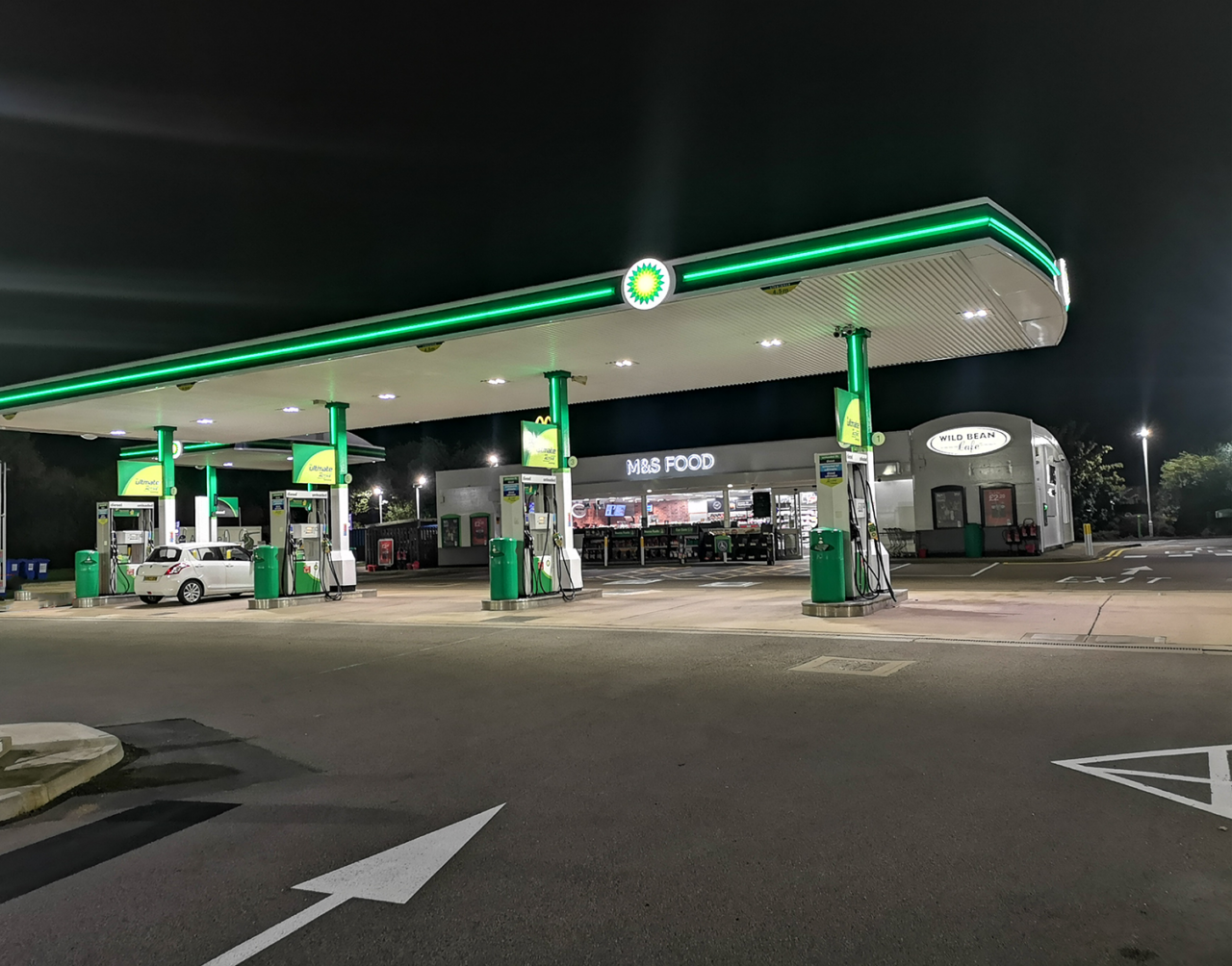
There is a moment every forecourt operator understands instinctively. A driver approaches from a distance, eyes flicking between the road ahead and the site in their peripheral vision. In seconds, a decision is made. Pull in or carry on. Many factors influence that choice, but one stands out more than most operators realise: light. Not decorative light. Not lighting as an afterthought. Illumination as a signal of safety, professionalism and reliability, delivered before the customer has even seen the shop front.
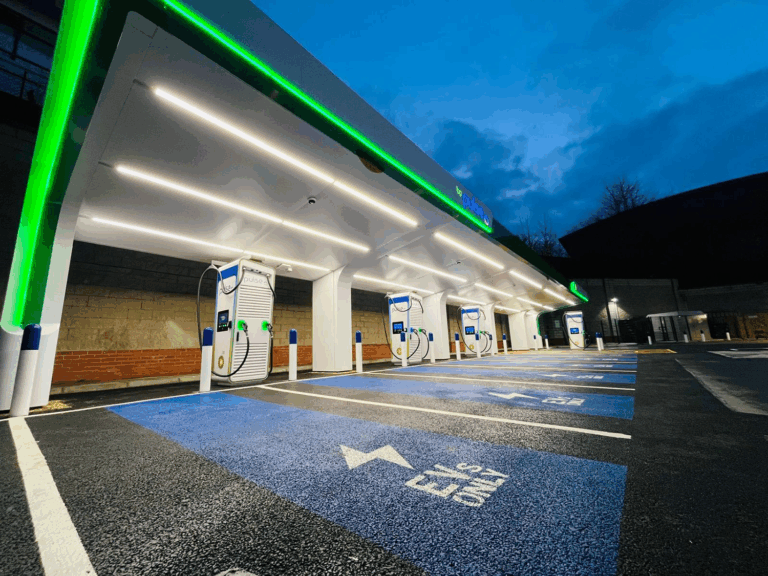
For too long, forecourt lighting has been treated as a practical necessity and little more. Provide enough brightness to meet requirements, replace lamps when they fail and move on. Yet the modern forecourt is no longer just a place to refuel. It is a convenience destination, a service stop and increasingly a charging hub. As the role of the forecourt evolves, lighting becomes a strategic asset that builds customer confidence, reinforces staff safety, strengthens brand presence and reduces long-term operating costs.

The psychology of a well-lit site
People do not consciously analyse light levels: they respond emotionally. A bright, evenly lit forecourt feels open, orderly and cared for. A gloomy site feels uncertain, regardless of the service offered. This matters because forecourts are, by nature, environments where customers make fast decisions. They do not browse for inspiration. They arrive with a purpose and they want to complete it quickly.
Lighting sets the tone for a smooth and straightforward visit. When the customer can see the bays clearly, read signage without effort and move safely between the pump and shop, the entire visit feels efficient. When lighting is patchy, harsh or poorly directed, uncertainty creeps in. Drivers hesitate, pedestrian routes feel less defined and the site can appear neglected even if other standards are high. In competitive locations, that hesitation can translate directly into lost throughput.

Safety is not just compliance; it is confidence
Forecourts combine vehicles, pedestrians, wet surfaces, fuel zones and often late-night footfall. That combination demands more than minimum compliance. A strong lighting strategy enhances safety across the forecourt and visibly reassures customers that the operator takes site standards seriously.
Good illumination reduces trip risks by improving contrast on kerbs, walkways and changes in level. It helps drivers to manoeuvre around pumps and navigate tight layouts. It also enables staff to monitor activity, particularly in quieter periods. Importantly, well-designed lighting avoids creating deep shadows or overly bright hotspots that can impair vision as the eye adjusts. The aim is consistent brightness where customers and vehicles interact, with particular attention to pump islands, shop entrances, payment points and any service areas such as air and water bays.
Security follows naturally. A well-lit forecourt can deter opportunistic crime and support Closed-Circuit Television (CCTV) operation, making the footage sharper and easier to review. It also changes behaviour. Customers are more likely to feel comfortable staying on site for a shop visit if they perceive the environment as safe. In an era where convenience retail margins matter, that extra spend is not incidental.
Brand visibility begins long before the totem
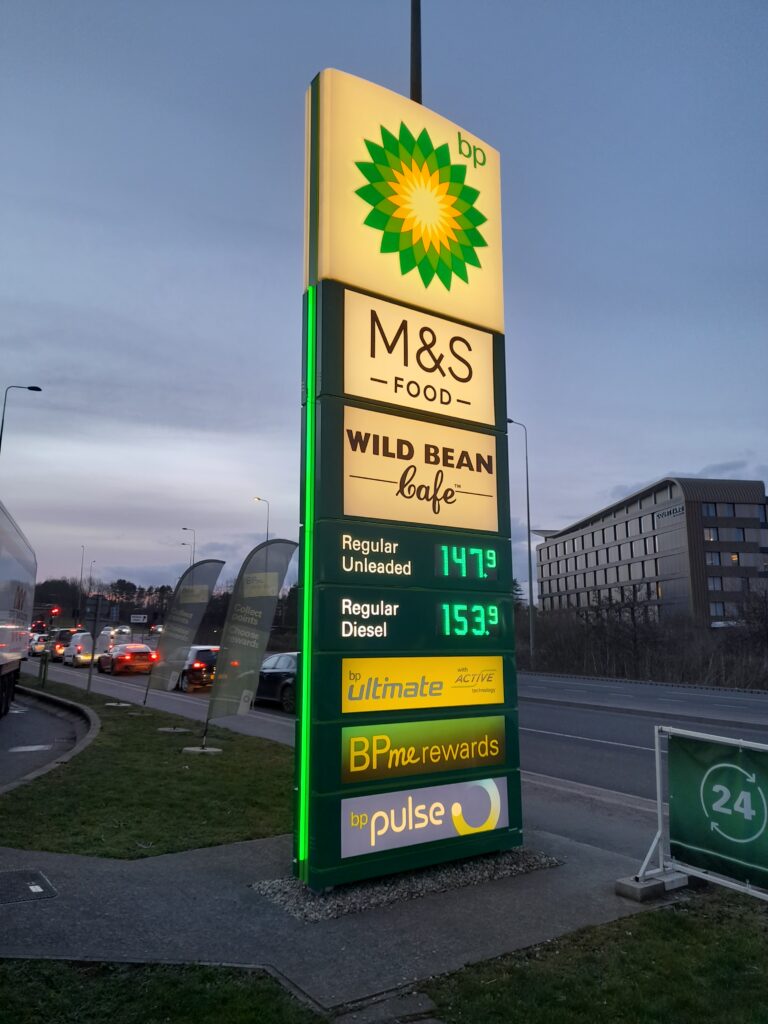
Forecourt brands invest heavily in visual identity, yet lighting is often treated separately from signage and fascia design. In reality, illumination is the medium through which brand presentation is experienced, especially after dark and during winter periods.
A fascia can be newly cleaned and perfectly branded, but if the lighting is dated or uneven, the site will still look tired. The opposite is also true. A clean, well-illuminated canopy can elevate the entire impression of a site, even before a customer notices details. Crisp white lighting that renders colours accurately makes branding feel modern and intentional. Poor colour rendering can make signage appear washed out, distort brand colours and weaken recognition at speed.
This is where lighting shifts from a practical requirement to a marketing asset. It improves visibility from the road, reinforces familiarity and makes the site stand out in a crowded landscape of competing forecourts, supermarkets and roadside retail.
Energy efficiency without compromise
The strongest argument for advanced lighting is not just aesthetics or even safety. It is long-term efficiency. Energy costs have turned every kilowatt into a decision. Modern lighting solutions offer a route to reduce consumption while improving site presentation, which is a rare win-win in operational planning.
Light-Emitting Diode (LED) upgrades are often the first step, but true improvements come from design and control. LEDs deliver greater efficacy, longer lifespans and more consistent output than traditional technologies. This reduces both electricity consumption and maintenance visits, especially in hard-to-reach areas such as canopy soffits and high-level columns.
Controls then unlock further savings. Dimming schedules, occupancy sensors in quieter zones and photocell controls help reduce unnecessary output while keeping the site comfortably lit. The aim is not to plunge the site into darkness during quiet periods. It is to match lighting levels to actual use while maintaining a consistent perception of safety and quality.
Planned preventative maintenance (PPM) also plays a role here. Lighting performance deteriorates gradually due to the accumulation of dirt, lens ageing and misalignment. A structured approach that includes cleaning, checks and timely replacement maintains output and avoids the false economy of waiting for failure. A lamp that works is not necessarily a lamp that performs well.
A better customer experience translates into measurable returns
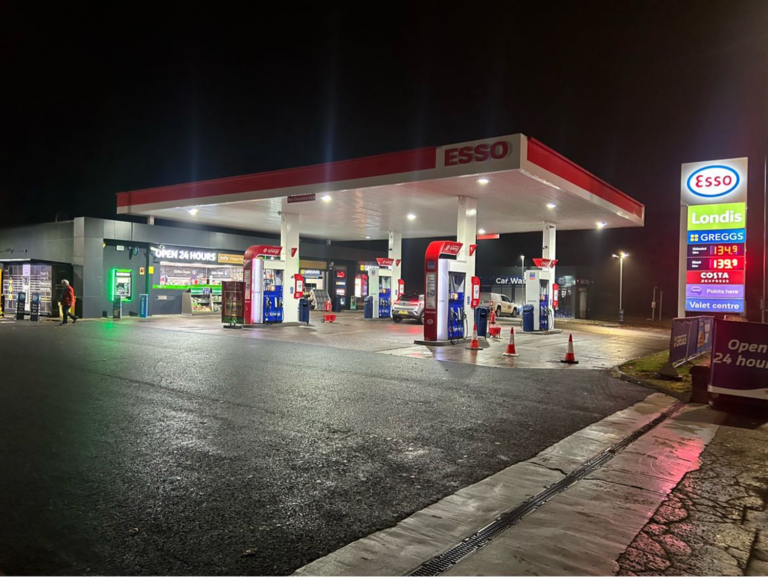
Customers rarely praise forecourt lighting in reviews, but they react to it with their behaviour. A bright and welcoming site encourages drivers to pull in. Clear illumination at the pump reduces friction during payment and refuelling. A well lit route to the shop increases footfall. A comfortable environment helps to extend dwell time, which can increase basket size.
Lighting also affects staff experience, which operators sometimes overlook. Good light reduces fatigue, improves cleaning standards and can raise morale during late shifts. It also helps staff manage incidents quickly because visibility across the site is improved.
When combined, these factors contribute to performance. Improved conversion from passing traffic, stronger shop attachment, fewer incidents, better security and lower energy use all reinforce the case for treating lighting as a strategic investment rather than a reactive expense.
What advanced lighting looks like in practice
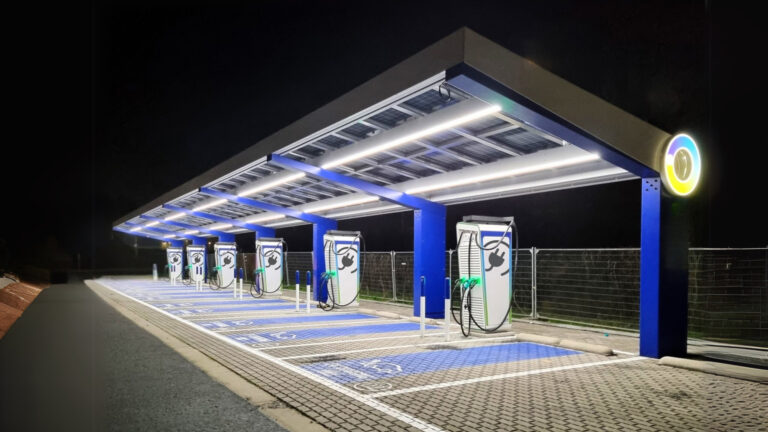
Advanced does not mean complex for the sake of it: it means purposeful. A modern forecourt lighting plan considers the site as a whole, balancing brightness, uniformity and glare control. It uses fixtures designed for outdoor environments and hazardous zones where required. It integrates canopy lighting with perimeter and parking illumination so that the site feels coherent rather than stitched together over time.
It also aligns with brand presentation. Colour temperature is selected to flatter materials and ensure accurate colour rendering. The placement of light aids wayfinding so that entry, exit, pedestrian routes and service points are obvious. Lighting levels are mapped so the site feels consistent, from the first approach to the pump island and through to the shop door.
Crucially, good lighting only works when it is properly maintained. Even the best design fails if it is allowed to degrade. Dust, cobwebs and pollution build up on lenses and diffusers, reducing output and making light appear dull. A planned approach that includes cleaning and inspection keeps the investment working as intended and preserves the professional image that lighting is meant to deliver.
Lighting as a tactical decision, not a finishing touch
Operators face pressure from every direction. They must meet customer expectations for speed and convenience while protecting margins and managing rising energy costs. At the same time, they are expected to uphold ever‑higher standards around safety and sustainability. In that landscape, lighting becomes one of the most effective levers available because it influences both perception and performance.
A bright and carefully presented forecourt appears cared for, feels safer and performs better. It strengthens brand recognition and increases the likelihood that a passing driver becomes a paying customer. It reduces energy use through efficient technology and intelligent controls. It also reduces maintenance disruption through durable equipment and planned care. Most importantly, it sends a clear signal: this is a site that takes customers seriously.
In a market where motorists have options at every junction, that signal can be the difference between a site that is merely present and a site that is chosen.
TSG is here to help
Lighting may appear simple, yet its impact stretches across safety, customer confidence and operational efficiency. It is an area where small improvements deliver meaningful gains. TSG understands this balance well. With more than 30 years of experience assisting independent operators, major oil companies and supermarket networks, the company has a long history of helping forecourts create safe, welcoming and efficient environments.
TSG Technics works with operators to enhance lighting performance across the entire site, from canopy soffits to shop interiors. The team understands the demands of busy forecourts and the importance of lighting that is reliable, consistent and easy to maintain. Whether an operator is looking to upgrade ageing fittings, improve uniformity or move towards more energy-efficient solutions, TSG provides guidance rooted in practical experience.
The company offers a broad range of lighting options, supported by installation, servicing and planned preventative maintenance. Its solutions work across a variety of environments beyond the petrochemical sector, extending to hotels and large retail estates across the UK. Whatever the setting, the aim remains the same: lighting that performs well, lasts longer and contributes to a better experience for customers and staff.