Shaping Tomorrow’s Energy Landscape
Businesses across the UK are under growing pressure to strengthen energy security, stabilise costs and reduce environmental impact. As the grid becomes increasingly strained and electricity prices continue their unpredictable climb, the role of on‑site renewable generation has never been more significant. Solar power has moved from a hopeful ambition to a practical necessity, offering reliable, clean energy that supports resilience and long‑term financial control.
This shift will take centre stage at the UK’s Real Estate Investment and Infrastructure Forum (UKREiiF) in May, where TSG will highlight how well‑designed solar systems can transform commercial spaces into productive energy assets. With demand for renewable power rising across every region and sector, solar is becoming a strategic tool for investors, developers and asset owners planning the next generation of UK infrastructure.
UKREiiF: Where the Future of Energy Meets Real‑World Delivery
From 19 to 21 May 2026, more than 16,000 industry specialists will gather in Leeds to explore solutions that shape the built environment. Energy security and sustainability are now at the heart of those conversations. Organisations are looking for ways to cut operating costs, reduce grid dependence and align their assets with both investor expectations and regulatory commitments.
Solar is one of the few technologies that answers all three. At UKREiiF, TSG will demonstrate how commercial and industrial sites can unlock significant value by generating their own clean electricity and pairing solar systems with battery storage, high‑voltage infrastructure and smart energy management.
Why Solar Has Become a Strategic Priority
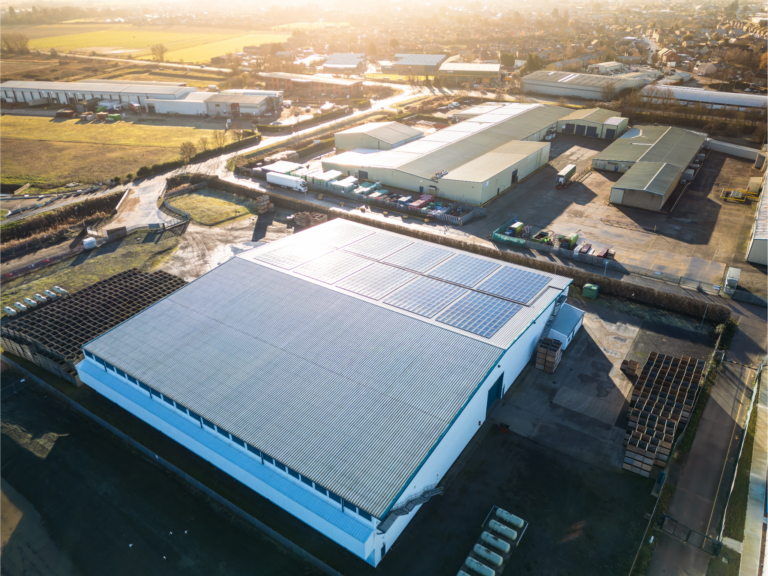
The case for solar has strengthened dramatically in recent years. Technology is more efficient, installation costs have fallen and energy prices have surged across the commercial sector. For businesses with large roof space or high daytime consumption, solar photovoltaic (PV) delivers immediate impact. It reduces reliance on grid‑supplied power, protects against future price rises and offers a credible route to lowering carbon emissions.
For many operators, solar is the first step towards energy independence. When combined with battery storage, surplus electricity can be used at night, during peak tariff periods or in the event of a power interruption. These systems provide a steady foundation for resilience and support a broader transition toward low‑carbon operations.
Fully Integrated Approach to Solar Delivery
TSG’s solar capability is built on a complete engineering and delivery model that brings all disciplines together under one roof. This structure mirrors the strengths of TSG’s wider business, giving clients a single accountable partner from the earliest concept through to energisation. By keeping design, installation and aftercare within one organisation, TSG maintains consistency, technical accuracy and clear project control at every stage.
Design and Feasibility
Every project begins with a thorough assessment of the site to confirm the most effective design. TSG’s specialists carry out structural surveys, daylight and shading analysis and a full review of historical energy use. Future operational plans, including expansion or changes in shift patterns, are also factored in. The result is a tailored design that maximises energy generation across the life of the system, supported by financial modelling that sets out projected savings, payback and long‑term return on investment. This early clarity helps clients plan with confidence.
Supply and Installation
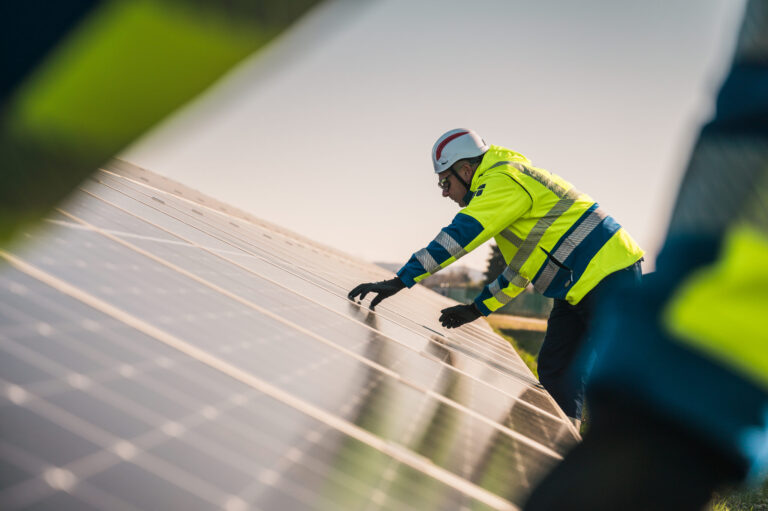
Only Bloomberg Tier 1 solar equipment is used across TSG’s installations, selected from manufacturers recognised for strong financial stability and a proven track record of supplying reliable modules to large, independently financed projects. All civil works, cabling, infrastructure and commissioning are handled by experienced in‑house teams who uphold strict quality and safety standards. This coordinated approach removes handover delays and ensures that every element performs as intended. Whether mounted on rooftops, arranged on ground frames or incorporated into solar carports, each system is installed with technical precision and engineered for long‑term reliability.
Service and Maintenance
Solar performance depends on regular care. TSG provides ongoing service, including inspections, inverter checks, production analysis and fault detection. Technicians review the condition of panels, wiring and supporting structures, while monitoring tools track output trends over time. This proactive approach protects yield, safeguards warranties, extends equipment lifespan and ensures the system continues to deliver consistent value.
Solar and Battery Storage: A Powerful Combination
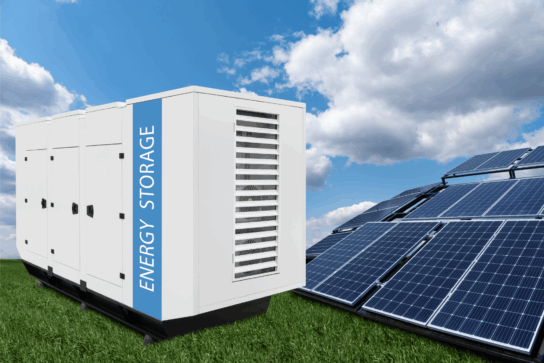
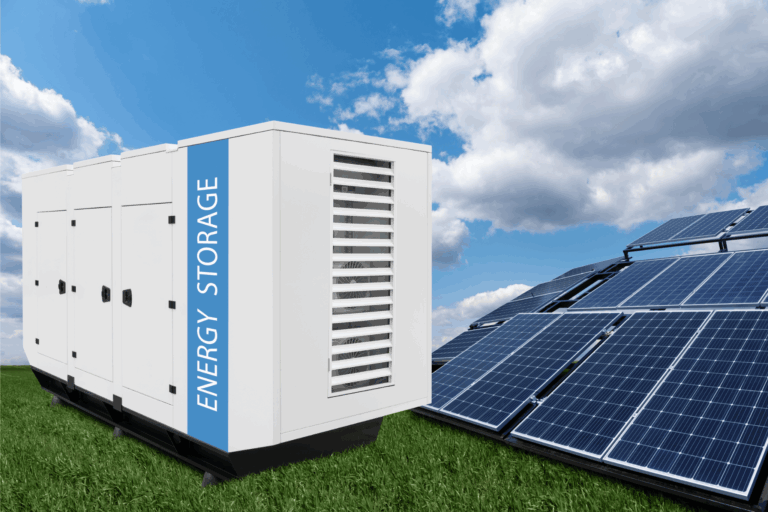
Battery energy storage systems (BESS) have become essential companions to solar installations. They enable businesses to store surplus electricity and use it when generation dips or prices spike. This strengthens resilience and reduces exposure to tariff volatility.
TSG delivers tailored systems to commercial demands. These batteries offer long lifespans, stable performance and minimal maintenance. When paired with solar, they unlock long‑term cost savings and provide a buffer against grid instability. For many companies, this represents the first step towards a decentralised energy strategy.
In commercial environments, combining solar with battery storage also creates opportunities for behind‑the‑meter revenue stacking. By integrating several technologies, businesses can unlock value from multiple services simultaneously, including peak shaving, load shifting, demand response and controlled export to the network. This layered approach strengthens financial returns by allowing the system to support on‑site operations while contributing surplus capacity to available grid services. The result is a more adaptable energy strategy that improves resilience and shortens the payback period.
Solar in the Built Environment: New Opportunities for UK Infrastructure
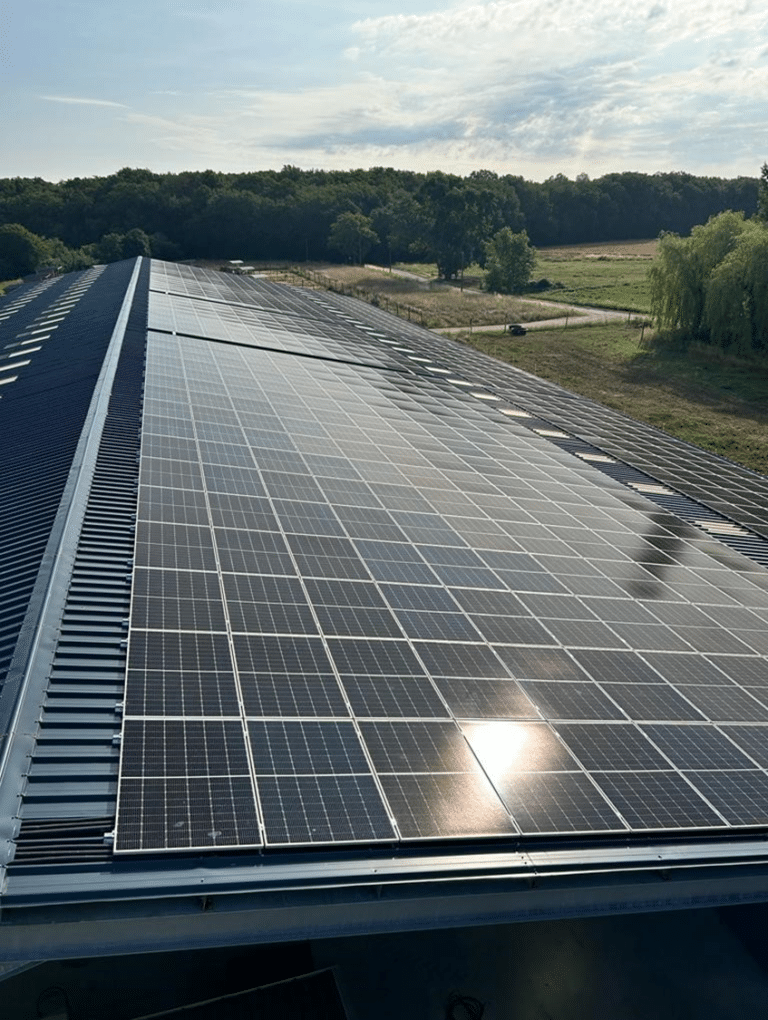
Innovation is reshaping how solar is deployed across commercial estates. Rooftops remain a valuable starting point, but many organisations are now exploring ways to extend generation capacity beyond traditional settings. Car parks, service yards and logistics zones are being redesigned as energy assets, using solar carports and ground structures to capture areas that would otherwise sit idle.
This practice allows businesses to increase on‑site generation without disrupting core operations or altering building layouts. Solar can also be integrated into wider infrastructure upgrades, including fleet electrification, battery storage and high‑voltage connections, creating multi‑purpose energy hubs that support long‑term sustainability goals. As pressure on the UK grid increases, these adaptable solutions help organisations reduce demand, strengthen resilience and turn under‑used space into productive energy sources.
Solar Carports
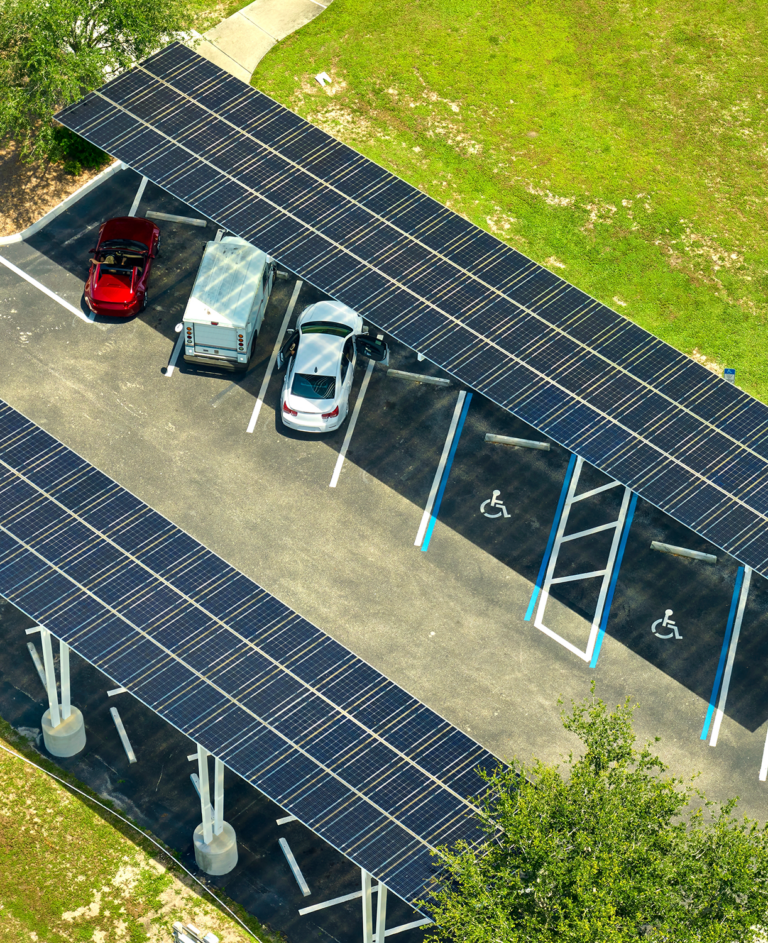
Car parks can become productive energy assets when fitted with solar canopies. These structures turn previously unused space into clean electricity generators, while also providing shade and shelter for vehicles. Solar carports contribute to site aesthetics and offer visible evidence of sustainability, making them well suited to retail parks, logistics hubs and large commercial estates. The electricity generated can support building loads, power electric vehicles (EVs) or be stored for later use, depending on the site’s needs.
Integrated Energy Hubs
Some businesses are combining solar, battery storage and EV charging into single connected ecosystems. These hubs support fleet electrification, deliver operational efficiency and turn previously passive spaces into active contributors to energy strategy.
With growing pressure on the grid, these systems provide resilience while reducing demand on national infrastructure.
Compliance, Quality and Confidence
TSG delivers solar and related energy systems backed by full accreditation. As an established Engineering, Procurement and Construction (EPC) contractor and a national Independent Connection Provider (ICP), the company provides both technical rigour and regulatory clarity. This governance ensures that solar installations align with safety standards and grid requirements while supporting long‑term operational performance.

Meet Matt Cooper: Your Solar Specialist at UKREiiF
At the heart of TSG’s solar strategy is Matt Cooper, Solar Business Development Director. With deep experience in large‑scale PV systems, Matt helps organisations harness the sun’s energy to drive commercial and environmental progress.
He works closely with clients to design solutions that meet operational goals, whether rooftop systems for logistics hubs, ground‑mounted arrays for industrial estates or solar carports integrated with EV charging. At UKREiiF, Matt will share insights on how solar can turn commercial sites into productive assets that cut costs, strengthen resilience and advance ESG performance.
For businesses unsure where to begin, a conversation with Matt offers clarity and a practical roadmap forward.
UKREiiF 2026: Start the Conversation
Solar is no longer a future ambition. It is a proven, dependable and commercially attractive solution that supports both cost control and sustainability. At UKREiiF 2026, TSG will demonstrate how integrated solar systems can deliver long‑term value across estates of all sizes and sectors.
Visit TSG at UKREiiF and speak with Matt Cooper to explore how solar can power your next project and help you build a resilient, low‑carbon future.