A Smarter Route to Resilience and Energy Control
By Cheryl Ashton, Marketing Coordinator, TSG UK
Battery energy storage has become a strategic asset for organisations seeking stability, cost certainty and stronger environmental performance. This piece explores how storage enhances operational resilience, strengthens sustainability commitments and gives businesses greater confidence in an unpredictable energy landscape.
Across the UK, the way businesses think about energy is changing at a remarkable speed. Rising costs and pressure on the grid have reshaped priorities, while sustainability targets have moved from optional ambitions to firm expectations. In this new operating environment, one technology has emerged as a decisive force, bringing control, stability and long-term value to organisations wanting to build resilience. Battery energy storage systems have moved firmly into the mainstream, becoming an essential part of commercial energy strategy rather than a speculative addition.
The reasons are clear. Renewable generation alone is not always predictable, yet businesses are expected to operate at full pace without interruption. Energy markets continue to fluctuate, making budgeting more difficult and exposing organisations to sudden cost increases. Battery storage addresses these challenges by turning electricity into a managed asset. Rather than allowing clean energy to flow unused back to the grid, it can be stored on site and released at the most beneficial moment. This shift gives companies more control over their own consumption and provides a firewall against the uncertainty of the wider market.
TSG Solar has witnessed first-hand how battery storage has strengthened operations across sectors ranging from manufacturing to logistics, retail, healthcare, data management and defence. Each organisation faces different pressures, yet the need for reliable, affordable energy is a consistent theme. Battery systems help to bridge the gap between environmental ambition and commercial reality by supporting continuity, protecting budgets and enhancing sustainability. They have become a practical way to reduce risk while building confidence in long-term planning.
From Intermittency to Independence
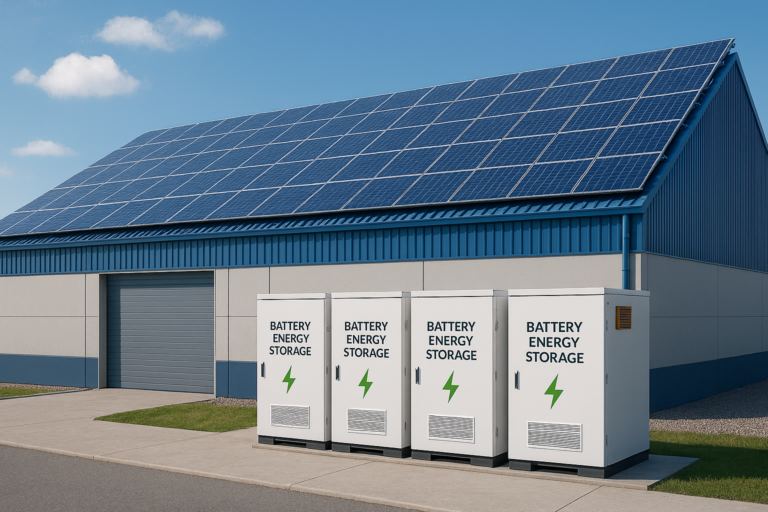
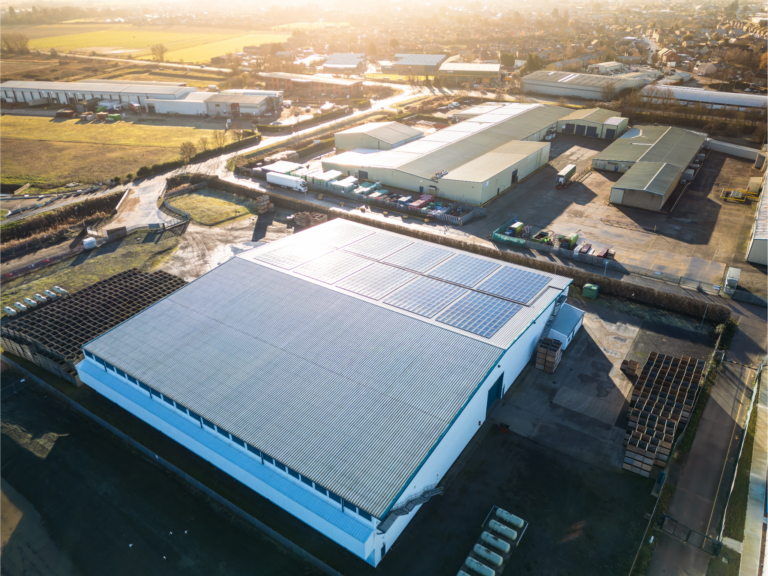
Solar generation is a powerful tool for cutting energy costs and reducing emissions, yet even the most productive array will only generate power when sunlight is available. Battery systems allow businesses to capture surplus electricity during periods of high production and retain it. Stored energy can then be used during overcast conditions, peak tariff windows or overnight. This smooths out the natural peaks and troughs of solar generation, giving companies greater certainty throughout the day.
The value of this capability extends beyond operational convenience. By storing energy on site, businesses reduce their dependence on the national grid and become less vulnerable to supply constraints or market pressures. Battery systems also support a managed approach to energy consumption, allowing businesses to shift usage away from expensive periods and secure long-term savings. As grid reliability continues to be tested by rising national demand, the case for maintaining locally controlled energy reserves becomes ever stronger.
In many cases, a solar installation paired with battery storage allows a business to rely primarily on its own generation for a significant proportion of the year. This reduces exposure to price volatility and gives businesses greater certainty in their financial planning. It also helps organisations take meaningful steps towards reducing their carbon footprint, a goal central to the UK’s environmental commitments.
A Practical Route to Long-Term Savings
The commercial benefits of battery storage go far beyond simple backup. A well-designed system, sized correctly for the site, becomes a financial asset in its own right. By storing power when tariffs are low and drawing on reserves instead of purchasing electricity during high-rate periods, businesses can significantly reduce overall energy spend.
For some organisations, the savings are immediate. For others, they accumulate steadily over time as market conditions evolve. Either way, a battery system creates opportunities to manage energy far more strategically than before. It offers protection from sudden price swings and supports long-term planning with greater confidence.
Lithium iron phosphate batteries are a common choice for commercial applications due to their long lifespan, consistent performance and ability to handle repeated cycles with minimal degradation. Their efficiency stems from low internal resistance, which allows quick charging and smooth discharge with limited losses. This reliability is vital for businesses that need dependable energy throughout the week, regardless of external circumstances.
Solar and storage systems typically achieve a payback period of around seven years, depending on usage patterns and site conditions. Once in place, the combined system begins to shape a more predictable and secure energy future. The shift to self-generated power brings both commercial and environmental value, making it a strategic investment rather than a reactive measure.
Strengthening Energy Security at a Critical Time
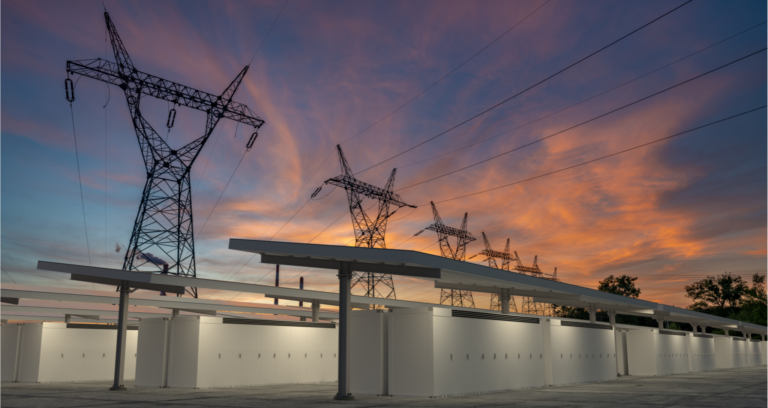
Power continuity is central to operational resilience. A brief outage can be disruptive to some businesses and deeply costly to others. Battery systems provide immediate support during grid failures, maintaining supply for essential functions and keeping operations moving. This capability has taken on greater significance as the UK’s energy network moves through a period of notable change and mounting pressure.
With more extreme weather events, electrification across transport and heating, and a rising share of renewable generation feeding into the network, grid conditions are expected to become more complex. Battery storage helps manage these challenges by taking strain off the national system. When widely deployed, these systems can support the grid by smoothing irregularities in supply and demand, contributing to a more balanced and efficient energy landscape.
For businesses, the advantage is clear. On-site storage avoids costly disruptions and reduces reliance on gas-price-linked wholesale markets. It creates a buffer that supports continuity, protects production and prevents operational interruptions. In sectors where reliability is non-negotiable, such as data services or remote operations, battery systems have become an essential layer of protection.

A Strong Step Towards Sustainability
Sustainability commitments are shaping long-term strategy for organisations across the UK. Battery systems play a leading role in helping businesses meet environmental expectations through more effective use of renewable energy. By storing clean electricity generated on site, businesses reduce their reliance on fossil-fuel-based power and support the UK’s journey towards a cleaner energy system.
In addition to cutting emissions, energy storage demonstrates a proactive stance on environmental responsibility. It signals an organisation’s willingness to invest in modern solutions that support a lower-carbon future. This mindset is increasingly valued by customers, partners and investors, bolstering reputation at a time when sustainable practices are highly regarded.
Integrating storage with renewable generation also places businesses ahead of future regulatory changes. As environmental regulations tighten, those with established low‑carbon systems will be better equipped to adapt, while preserving continuity and managing expenditure.
TSG UK: Delivering Battery Storage with Confidence
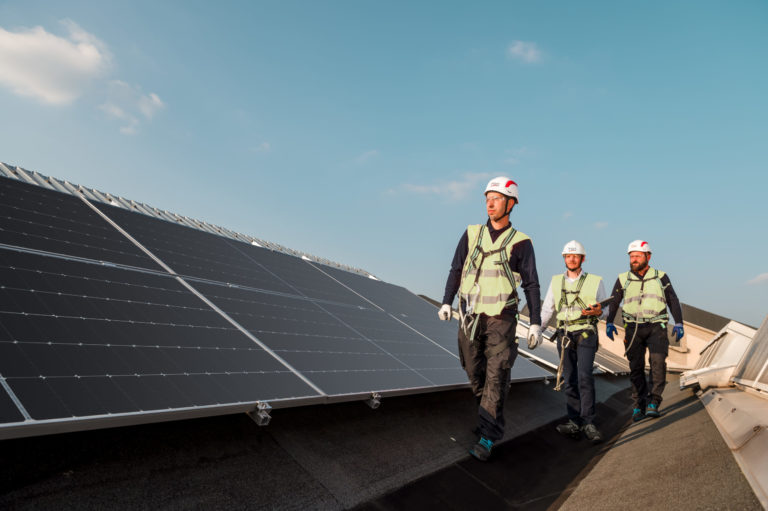
TSG UK sits at the centre of the shift towards a more resilient, low-carbon future. Through TSG Solar and TSG Power, the company provides fully engineered solutions that guide businesses from initial assessment through to installation and ongoing maintenance. Each project is managed with meticulous attention to detail, informed guidance and a commitment to quality and safety.
As both an Engineering, Procurement and Construction (EPC) contractor and Independent Connection Provider (ICP), TSG carries out all works in-house, including civil engineering, cabling, infrastructure, commissioning and grid connection. This integrated approach removes unnecessary delays and ensures every project begins with a comprehensive survey and feasibility assessment, followed by detailed financial modelling to demonstrate the expected return on investment. TSG’s consultative process ensures that the chosen system is tailored precisely to the client’s goals, with clarity at every stage. Once installed, service and maintenance packages keep systems operating at peak performance in accordance with strict Quality, Health, Safety and Environment (QHSE) standards.
Building the Future of Commercial Energy
Battery storage has moved far beyond early adoption. It has become a central component of modern energy strategy, giving businesses the confidence to navigate a rapidly changing landscape. It supports resilience, cuts costs, strengthens sustainability performance and provides a practical foundation for long-term planning.
TSG UK stands ready to deliver the expertise, engineering and innovation required to help businesses take control of their energy future. Through considered design, reliable installation and ongoing support, TSG provides the tools to reduce risk, unlock value and embrace the transition to a cleaner and more secure energy system.