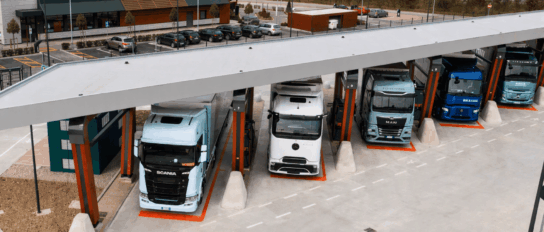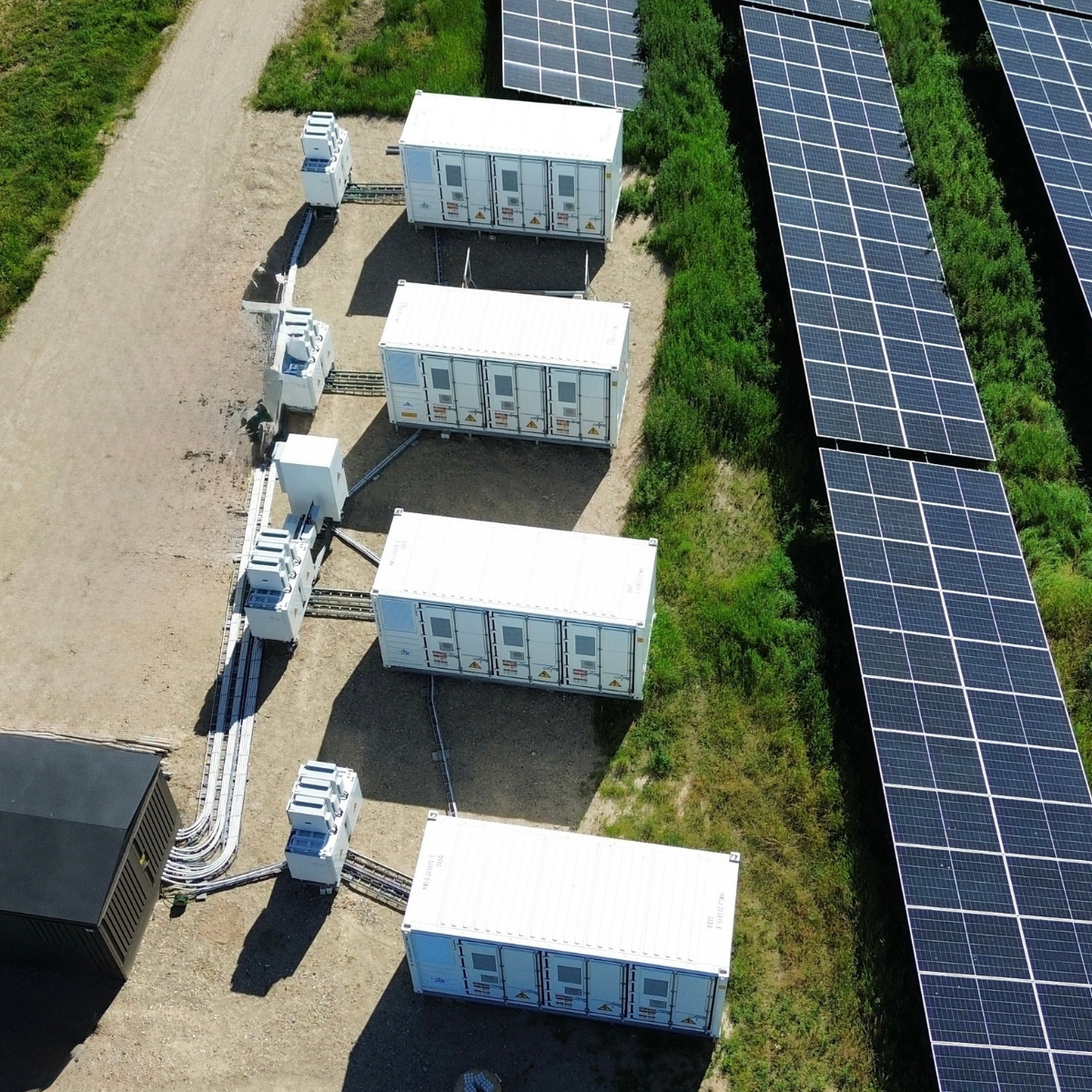
Energinet is working on connection terms under which a battery system can be connected to the grid on condition that it can be disconnected and controlled during the hours when capacity is in highest demand. The bottleneck is the same for Danish sites, regardless of whether the plan is to store energy or to charge vehicles.
The batteries are already balancing the system; grid capacity is the new challenge
Energinet now describes batteries as part of the solution to the lack of grid capacity. In a statement issued on 11 September, the company writes that batteries must make an even greater positive contribution to the electricity system and to the green transition, and that this requires the right framework to ensure they help where they create the most value for the electricity grid.
The framework is currently being developed, and it will apply to any business with a site where connection capacity is limited.
Kim Willerslev Jakobsen, Director of System Operations at Energinet, says:
„I definitely see batteries as a very important part of an electricity system that is becoming greener and greener. There will be a need for much greater flexibility and for smoothing out peaks and troughs in both electricity generation and consumption. Batteries are good at balancing the electricity system. But they must also, to a far greater extent than at present, be able to help solve the problems of grid capacity. That is why we are working tirelessly to ensure that batteries are given the right opportunities to operate in a grid-friendly manner within the transmission grid.“
There are two tasks involved in the quote, and only one of them has been resolved. The batteries already handle the balancing. The contribution to grid capacity needs to be adjusted, and that is the part for which Energinet is now establishing the conditions.
Energinet bases its approach on technological developments. Prices have fallen, the technology has matured rapidly, and a battery can respond far more quickly within the electricity grid than many other solutions; it is these characteristics that make it possible to smooth out peak demand and store electricity from solar and wind power until it is needed.
Huge demand for a new electricity grid
Energinet and the Danish electricity network operators have, in a short space of time, faced a surge in demand for new electricity networks. Consequently, the expansion of the electricity transmission grid must be accelerated, and priorities must be set amongst the many applications. At the same time, new solutions must be found to ensure that the existing grid is utilised more effectively or to relieve the strain on it.
In the latter category, batteries are an obvious choice, writes Energinet, which is also spot on about one thing. Batteries are not an alternative to building more electricity grid infrastructure. They complement grid expansion and help Energinet make better use of the capacity that already exists.
This positive stance has certain limitations, as Energinet itself points out. The company takes a positive view of the batteries when they operate in a way that relieves rather than places a strain on the electricity transmission grid, or in a way that does not require additional electricity grid capacity.
When price alone determines the plant’s operation
Many battery owners will typically buy electricity when the price is low and sell it again when it is high. For the battery owner, this makes perfect sense. However, if the system is controlled solely by price, it may place a strain on the electricity grid at the same times as other major electricity consumption, and if the batteries use grid capacity during peak load periods, this may increase the need for grid expansion and cause delays for industry and other green projects.
Kim Willerslev Jakobsen sets out the commercial terms:
„Batteries may prove to be a very good idea in a strained electricity grid. But we need solutions where the batteries are attractive to investors whilst also delivering value to the electricity system. This requires us to be able to manage and agree on when the batteries use the grid, so that they relieve the strain rather than placing further pressure on capacity.“
Bear in mind the investor’s perspective. A plant that can be shut down is still a plant for which someone has borrowed money, and so the key factor is how predictable the restriction is.
Limited online availability: two products available today, six on the way
The specific mechanism is known as restricted grid access, or BNA for short. The plant is granted access to the grid, but can be disconnected, restricted and controlled by Energinet during the hours when capacity is in highest demand.
It is currently available in two versions, both on the transmission grid: restricted grid access for electricity consumers; and temporarily restricted grid access for electricity producers, i.e. feed-in.
Energinet is currently developing methods designed, taken as a whole, to ensure that limited grid access can be offered to all customers across the transmission and distribution networks. Six BNA products are in the pipeline, and the first is currently out for consultation.
Energinet is seeking input from the industry
The company also intends to invite market participants to engage in dialogue on the development of future network products that could potentially meet further demand from network customers. Kim Willerslev Jakobsen explains it as follows:
„The battery market has developed very rapidly, and manufacturers are constantly identifying new opportunities, including those that could benefit the electricity transmission grid. We therefore wish to seek ongoing input from industry stakeholders on both the challenges and the solutions.“
Two aspects are central to this work. New solutions must be capable of being operated safely by Energinet, and they must be approved by the Danish Energy Regulatory Authority. Energinet also notes that work is underway, both in Denmark and abroad, on solutions where batteries can be used to free up more grid capacity, so that more green generation and higher electricity consumption can be connected to the grid.
Where the batteries are already delivering
Energinet highlights two locations where the facilities are currently in operation.
The first is balancing. Energinet purchases system services to ensure that there is a constant balance between consumption and generation, and a battery is fast enough to provide them. Around 300 MW of battery capacity and 100 MW from electric vehicles have already been approved to provide system services, and more MW are constantly entering the system services markets. The inclusion of electric cars in that figure is significant in itself, as a fleet of charging vehicles is thus already helping to balance the system, rather than merely representing consumption that needs to be met.
The second category comprises installations set up in connection with existing solar farms or wind turbines. These can capture electricity from the solar farm when the sun is beating down, and feed the electricity into the grid later, when production is lower and demand is higher. The agreed capacity does not increase, but it is utilised more efficiently, and Energinet states that this can make a renewable energy project more grid-friendly without necessarily requiring more cables or additional capacity.
The same capacity limits charging
We see the same limitation in charging projects. For a transport company that needs to charge vehicles at its own depot, the available capacity of the connection determines how many and how powerful the chargers can be, and this issue arises early on in the project.
A battery on site can be charged during periods when there is spare capacity on the grid, and can supply high power for charging during the day without the need to expand the connection. This principle also applies to a refuelling station that has charging points installed alongside the existing consumption points.
That is why the new terms are of interest beyond the battery market. If access to the grid becomes a matter that can be agreed upon, more sites will have a viable path to electrification, including those where extending the connection is not currently a realistic option.
The current situation
The terms are not final. Neither the consultation on the first BNA product nor the dialogue with the market has been concluded.
That said, the direction is clear enough to plan around. When the plant is permitted to use the grid will be a condition determined by how much capacity is available on site, and this makes grid access a prerequisite for the plant’s design rather than something that is sorted out afterwards.
The system operator is now working to make room for the plants on terms that are suitable for a strained electricity grid. This is a different situation from having to queue for capacity.
Energy storage in Denmark at TSG
TSG is active in the fields of energy storage and solar energy in Denmark through NRGreen, which TSG acquired in 2025. NRGreen designs, builds, connects to the grid and maintains solar panels and battery systems on the same site, and in Sorø, 10 MW of solar panels and a 10 MW, 20 MWh battery system are under construction. These are the types of installations to which the new connection terms will apply.
As well as Denmark, TSG has its own teams in all seven Nordic and Baltic countries and is part of a group operating in 30 countries. Read more about how the energy perspective was broadened in Denmark in the article TSG expands with solar power and BESS in Denmark.
Energinet’s announcement can be read at energinet.dk.