The European Union has adopted the Regulation on Alternative Fuels Infrastructure (AFIR) as part of its ambitious Fit for 55 policy. AFIR sets out clear targets for the roll-out of infrastructure for alternative fuels in the Member States. The aim is to promote sustainable mobility and facilitate the transition from fossil fuels to zero-emission energy sources such as electricity and hydrogen for both light and heavy-duty vehicles.

Why is AFIR important to you?
AFIR aims to standardise the infrastructure for alternative fuels across Europe by focusing on three key areas:
- Minimum requirements for new energy infrastructure: Ensure there is a sufficient number of charging points and hydrogen refuelling stations.
- Easy payment options: Make the payment process for topping up and recharging simple and accessible.
- Transparency of information: To provide users with clear and comparable price information.
For example, AFIR requires the installation of fast-charging stations with a total capacity of at least 300 kW for every 60 km along the core trans-European transport network (TEN-T), which covers the EU’s main transport corridors. These stations must be capable of charging cars and vans and must have at least one charging point with a minimum power output of 150 kW.
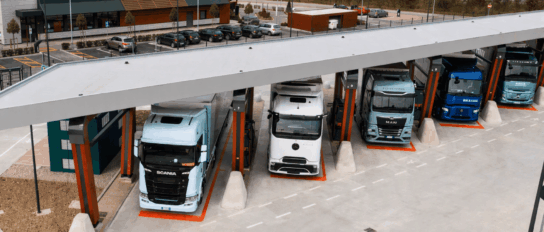
For heavy goods vehicles, AFIR stipulates that at least 15 % of the TEN-T network must have publicly accessible charging stations with a total capacity of at least 1,400 kW and individual charging points of at least 350 kW by 2025 at the latest.
AFIR’s requirements for electric vehicle charging points
AFIR has set out phased requirements for the number and capacity of charging points leading up to 2035. All publicly accessible charging points must accept electronic payments, whether by chip, magnetic stripe or contactless payment.
As an operator, you must ensure that all chargers with a power rating of 50 kW are capable of processing card payments. By 2027 at the latest, all chargers must display price information and accept electronic payments, which may require upgrading existing chargers or the associated payment terminal.
AFIR’s requirements for hydrogen infrastructure
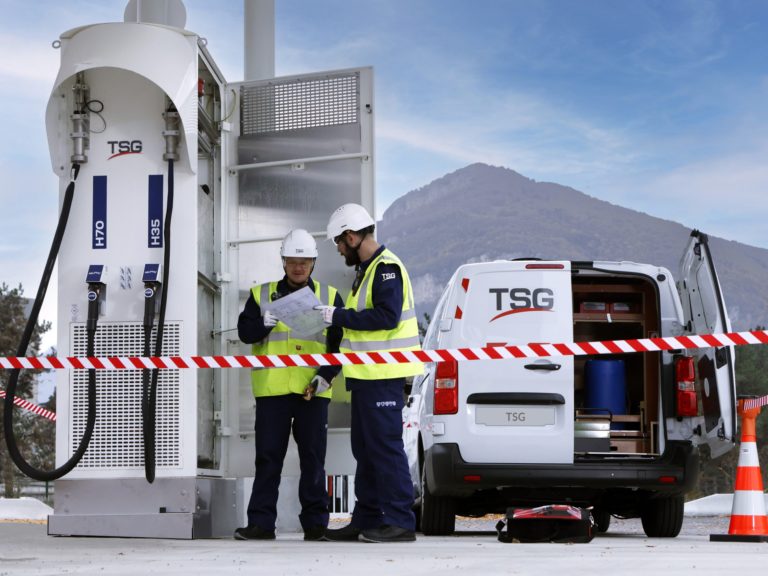
Hydrogen refuelling stations must be more widely available along the core of the TEN-T network. From 2030, cars and lorries must be able to refuel with hydrogen every 200 km on these roads. The stations must have a daily capacity of at least 1 tonne and be equipped with at least one 700-bar dispenser. The payment requirements are the same as for electric vehicle charging: customers must be able to see the price before refuelling and pay via terminals with a card reader or contactless functionality, without the need for a subscription.
Transparency and easy payment
AFIR addresses challenges relating to complex pricing structures and payment methods by requiring:
- Clear pricing information: Customers must be aware of the price of energy and any charges before charging or refuelling.
- Simple payment solutions: The payment process must be user-friendly and not require a subscription, with the option of electronic payments such as debit and credit cards, as well as contactless methods.
- Non-discriminatory pricing: Prices must be reasonable, transparent and must not discriminate between different users or service providers.
How can TSG help your business comply with AFIR?
TSG is a leading European provider of technical solutions in the field of responsible mobility. We offer:
- Installation and maintenance of EV and hydrogen infrastructure: Drawing on our extensive experience, we help businesses to implement charging solutions for both light and heavy-duty vehicles, including electric lorries and electric buses.
- Bespoke payment solutions: We provide payment systems that comply with all security standards (Payment Card Industry Data Security Standards – PCI DSS) and ensure a transparent and user-friendly payment process in accordance with AFIR.
- The transition to new forms of mobility: We support your business in its transition to sustainable energy sources by designing, installing and maintaining infrastructure to the highest safety standards.
AFIR brings both new requirements and opportunities for you as an operator. TSG can help your business implement an efficient and future-proof infrastructure for alternative fuels. Contact us to find out how we can help your business comply with the AFIR standards.