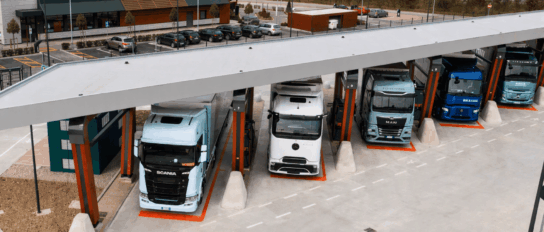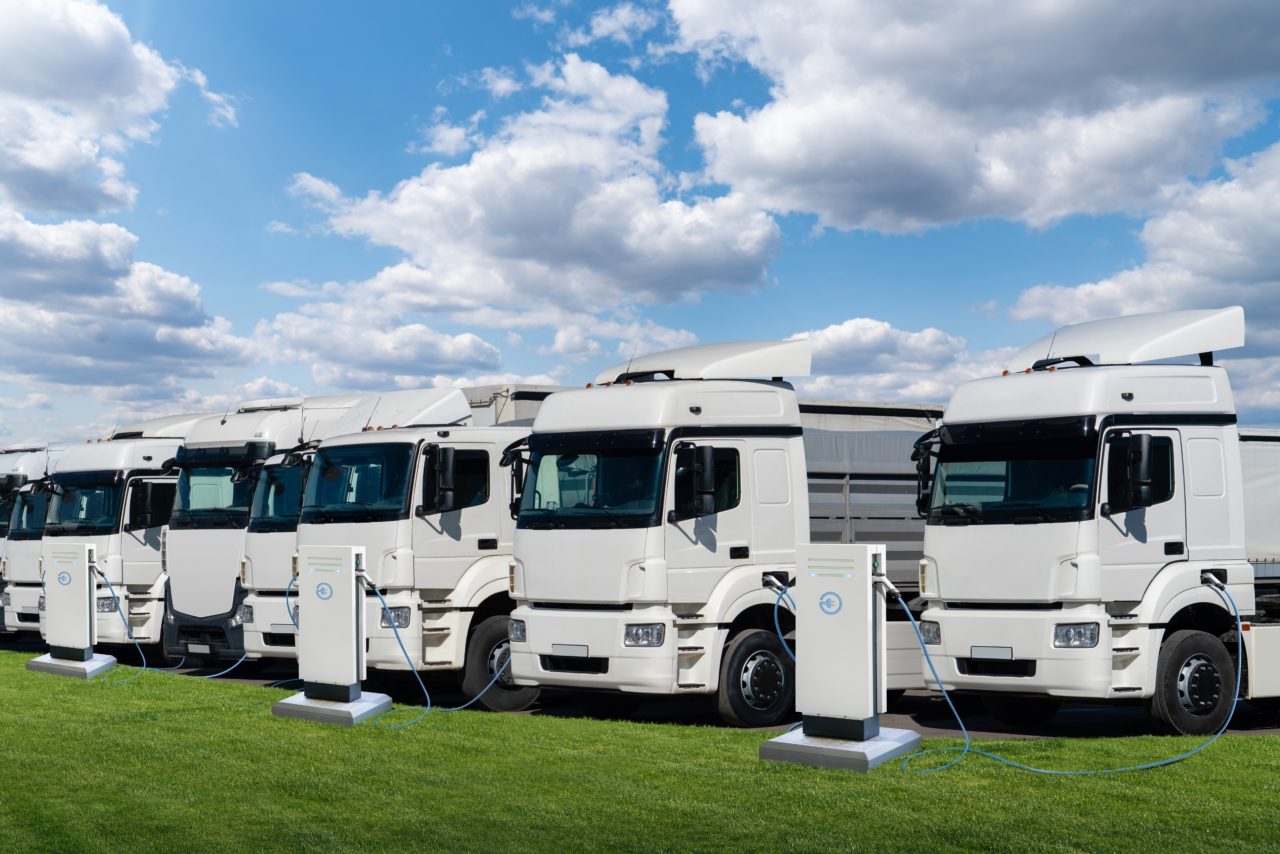
As more fleet operators are switching to electric vehicles (EVs), there is a pressing need to establish a charging infrastructure to meet their operational requirements. Whether they are bus, taxi, last-mile delivery or transport companies – they all operate fleets, and each has its own business objectives and requirements.
In this article, we will discuss the key criteria that need to be taken into account when planning a new charging infrastructure, including an assessment of charger types to determine the best option for fleets.
The shift to electric
Sales of electric vehicles (EVs) in the commercial fleet management sector have risen exponentially in recent years, primarily due to government incentives, reduced fuel and maintenance costs, and the prospect of driving high-performance, energy-efficient, low-emission vehicles. In many cases, fleet operators drive predictable routes every day that are pre-loaded into the driver’s sat-nav, eliminating range anxiety and making it effortless to optimise energy efficiency.
The transition to an electric vehicle fleet is both positive and inevitable; and businesses and public sector organisations can reap significant environmental, financial, reputational and operational benefits by embracing this technology sooner rather than later. Fleet operators that lead the way in the energy transition will encourage others to follow, helping to accelerate global CO₂ reduction and improve air quality for everyone.
Furthermore, the adoption of electric vehicles will help to enhance companies’ Corporate Social Responsibility (CSR) performance; an aspect that is becoming increasingly important to both customers and investors. A strong CSR policy demonstrates environmental awareness and conveys a positive, green brand image, which can give companies a competitive edge. Electric vehicles could be particularly important for public transport, taxis and last-mile delivery, as they convey the right message to environmentally conscious consumers who use these services.
What is the Total Cost of Ownership (TCO) for electric vehicles?
Electric vehicles are almost always more expensive to buy outright than their petrol or diesel equivalents, but slower depreciation and higher projected residual values help to make EVs a more lucrative investment.
Whilst EVs are often more expensive to insure, primarily due to the high cost of production, it is important to take into account government incentives, tax benefits, service and maintenance charges, and running costs, as it is in these areas that EVs really come into their own.
Service and maintenance costs for electric vehicles are typically lower than for equivalent traditional models, largely because the latter have more than 10 times as many moving parts as the former. Electric vehicles also have fewer parts that are prone to wear and tear.

The cost of electricity is far lower than the price of petrol or diesel, meaning that the cost per mile for electric cars is two to four times lower than for internal combustion engine (ICE) vehicles and hybrids. This enables fleet operators with private charging points to see a rapid return on their investment.
All things considered, the Total Cost of Ownership (TCO) is therefore generally more attractive for EVs than for internal combustion engine (ICE) vehicles. According to McKinsey, the TCO of EVs is 15 to 25% lower than that of ICEs.
Building a future-proof fleet
Governments around the world have amended their policies to encourage fleet operators to switch to EVs, with the sole aim of reducing emissions to improve air quality. Low Emission Zones (LEZs) are designed to discourage the most polluting vehicles from entering cities or urban areas.
All major European cities are set to adopt this radical strategy in the coming years; by 2030, it will cause disruption for internal combustion engine (ICE) fleets that are not adequately prepared, particularly if their destination lies within a Low Emission Zone (LEZ), as the journey will undoubtedly incur an unwanted charge if their CO₂ emissions do not comply with European standards.
How to cope with range anxiety
Range anxiety is a driver’s fear that the vehicle does not have enough energy storage to reach a suitable charging point or their final destination. This fear has previously been a major deterrent for fleet operators when considering the switch to EVs. However, thanks to recent innovations in battery technology that extend the driving range on a single charge, range anxiety is gradually being alleviated.
There are apps available designed to tell drivers where the nearest charging points are, how much they cost and whether they are free. This advanced technology, combined with a fleet’s own charging infrastructure, helps to alleviate range anxiety.
The decision to switch to electric is an important one, and you should give careful thought to your plan of action.
Key points to consider when setting up a charging infrastructure
The necessary steps and factors you need to consider when switching to an electric infrastructure include:
- The current number of vehicles in your fleet and a forecast of future growth.
- EV charging assessments will set out options for adding EV charging points to the existing electricity supply – be sure to take into account peak periods and any specific charging time slots required. You may need a distribution network operator (DNO) to upgrade the supply to ensure your energy infrastructure is capable of meeting the additional energy demand required.
- Anticipated charging strategy: overnight charging using AC chargers; fast daytime charging using DC chargers – or a combination of both. In general, we recommend a balanced mix, as DC chargers can provide a backup in the event of a failure in the overnight AC charging process.
- How much space do you have available to allocate to charging points? It is worth noting that each parking space will be occupied for at least 30 minutes to allow for a top-up.
- Would automatic vehicle identification be beneficial for your business? If so, it is worth including this feature in the charger’s specifications.
- Would you keep a mix of internal combustion engine (ICE) vehicles and electric vehicles (EVs)? In that case, managing your depot fleet would require a multi-energy monitoring system, such as the ProFleet ChargeLOG, which is also capable of monitoring your EV charging operations. All approved EV charging points (EVCPs) are networked, providing real-time monitoring and enabling faster response times to issues. For complete control, choose a monitoring system that offers all the necessary features and the flexibility to connect to multiple charger brands.
- Identify an experienced, reputable partner to supply, install and maintain the charging infrastructure. TSG can be your turnkey, one-stop-shop partner for e-mobility.
Which chargers are best for a fleet?
When developing a charging strategy for your business, selecting the right charger is a key factor in operational success. There is a wide range of chargers to choose from and, depending on your requirements, it may be more beneficial to opt for a combination of charger types and brands.
The most commonly used chargers for electric vehicle fleets are as follows:
- AC with a power output of up to 22 kW. Ideal for a commercial electric fleet.
- DC charging with power outputs ranging from 50 to 150 kW. Mainly used for fast charging of lorries, buses and electric vans.
- Pantograph with a power output of up to 400 kW, ideal for buses charging whilst en route at bus stops or at the terminus.

The availability of future infrastructure is key
There is a wide variety of manufacturers and brands, as well as local and regional technical requirements, to take into account. We recommend that fleet operators use only tier-1 suppliers with a proven track record. TSG has installed and maintained more than 25,000 chargers (both DC and AC) across Europe. With a wealth of experience in providing charging infrastructure, TSG can offer advice and support to help you choose the right chargers to ensure a successful and trouble-free operation.
Why TSG is your partner for e-mobility
As a leader in technical services for responsible mobility across 30 countries in Europe and Africa, TSG is a key enabler of the energy transition, including the implementation and maintenance of EV charging infrastructure. TSG provides comprehensive turnkey EV solutions, ranging from site surveys, design, construction, project management, civil engineering works, equipment installation and commissioning, backed by a service and maintenance package.
A strong heritage. The field of technical and electrical installations, carried out in accordance with the highest quality standards, is TSG’s legacy, combined with an intrinsic commitment to health and safety.
A local presence with international expertise. Site visits can be arranged through your local TSG office, whose experienced staff have a thorough understanding of local government guidelines and regulations governing EV charging installations.
Extensive portfolio. TSG has a strong portfolio of proven suppliers who have invested in our turnkey solutions for energy distribution and project management, including complementary solutions such as solar panels, static battery storage and site-level management of energy infrastructure.
A single point of contact for the entire project. TSG Charge will not only design, install and maintain charging stations across your network, but will also be your dedicated partner, supporting you through the energy transition. TSG Charge is able to work with legacy solutions right up to the latest technologies.
Get in touch with TSG to find the best charging solutions for electrifying your fleet.