A guide to AC and DC charging
The growing number of electric vehicles (EVs) in Europe is driving up demand for a well-developed charging infrastructure.
There are several types of electric car chargers, each with different charging speeds, plug types and charging technologies. To make it easier to choose the right solution, we have put together an overview of the main types of chargers, their advantages and possible uses.
AC and DC chargers – differences and advantages
Electric cars can be charged using either alternating current (AC) or direct current (DC).
The electricity grid supplies electricity in AC form, but electric car batteries can only store DC. The electricity must therefore be converted from AC to DC during charging – either in the car (with AC charging) or in the charger itself (with DC charging).
AC charging – the most widely used solution
AC charging is the most common charging method and is typically used for home charging, at workplaces and at public charging points.
Advantages:
- Cheaper to install and use
- Ideal for everyday charging
- Available in a range of power ratings
Here’s how it works:
When an electric car is charged via AC, the power conversion takes place in the car’s internal charger. The charging speed therefore depends on both the charger’s power output and the car’s on-board charging capacity.
DC charging – faster charging for long journeys
DC chargers are faster, but also more expensive and require a more powerful power supply. They are mainly found along motorways and major roads, where fast charging is essential.
Advantages:
- Significantly faster charging
- Direct current to the battery without conversion
- Ideal for long journeys and business use
Here’s how it works:
DC chargers convert the electricity outside the car and send it directly to the battery, making charging much faster than AC charging.
Charging speeds – how quickly can an electric car be charged?
The charging speed depends on several factors:
- The charger’s power output (e.g. 7 kW, 50 kW or 350 kW)
- The car’s maximum charging capacity
- The electricity grid’s capacity and power supply
Example: If a car can accept a maximum of 50 kW but is charged using a 100 kW charger, it will still only be charged at 50 kW.
Types of chargers and their uses
Home chargers & workplace chargers (AC charging)
- Power: 3–22 kW
- Charging time: 6–12 hours
- Location: Homes, offices, hotels
Ideal for everyday charging when the car is stationary for a long time.
Public chargers (AC & DC charging)
- Power: 11–50 kW
- Charging time: 1–4 hours
- Locations: Car parks, shopping centres, restaurants
Offers flexible charging whilst you’re on the move.
Fast chargers (DC charging)
- Power: 50–150 kW
- Charging time: 30–90 minutes
- Locations: Petrol stations, motorway service areas, approach roads
Ideal for longer journeys where a quick charge is needed.
High-Power Chargers (HPC) – ultra-fast charging
- Power: 150–350 kW
- Charging time: 20–40 minutes (0–80%)
- Location: Motorway service stations, major charging hubs
The fastest charging solution for long-distance driving.
Which type of charger is right for you?
- Private individuals: AC home chargers are the best solution for everyday use.
- Companies: Combine AC chargers for staff with fast chargers for company cars.
- Fleets and industries: Use a combination of AC and DC chargers, depending on the vehicles’ charging patterns.
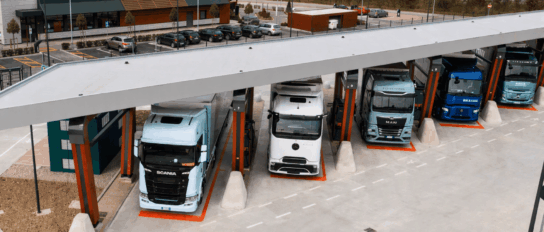
- Long-distance lorry drivers: HPC chargers offer the fastest charging on motorways.
TSG specialises in charging infrastructure for electric cars, electric buses and electric lorries. We tailor a solution precisely to your needs – regardless of the size of your fleet, charging times and journey distances. We can supply complete solutions, including payment terminal or registration terminal for company cars.
Fill in the contact form, if you’d like to find out what the best solution is for you.