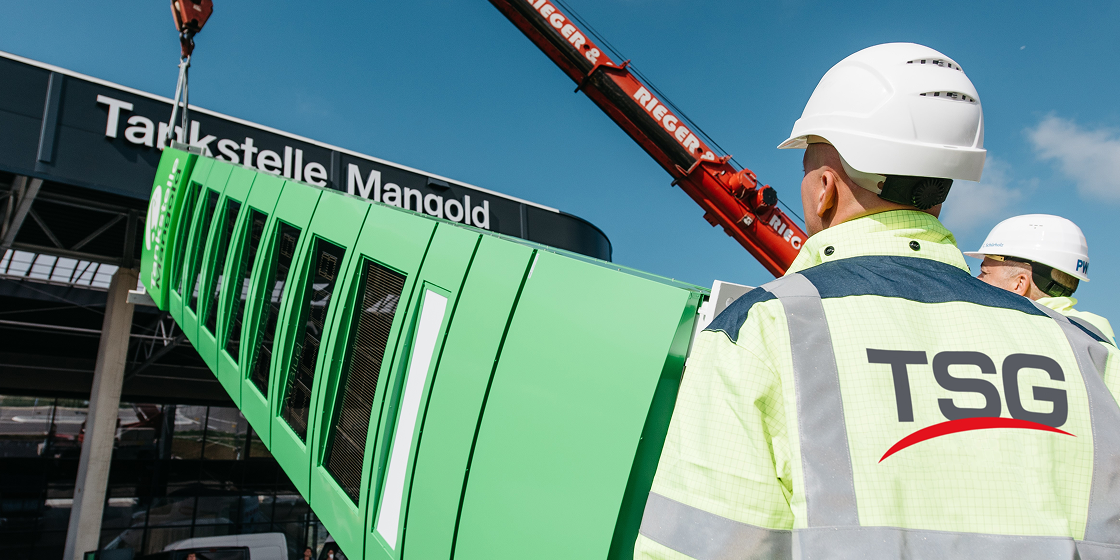
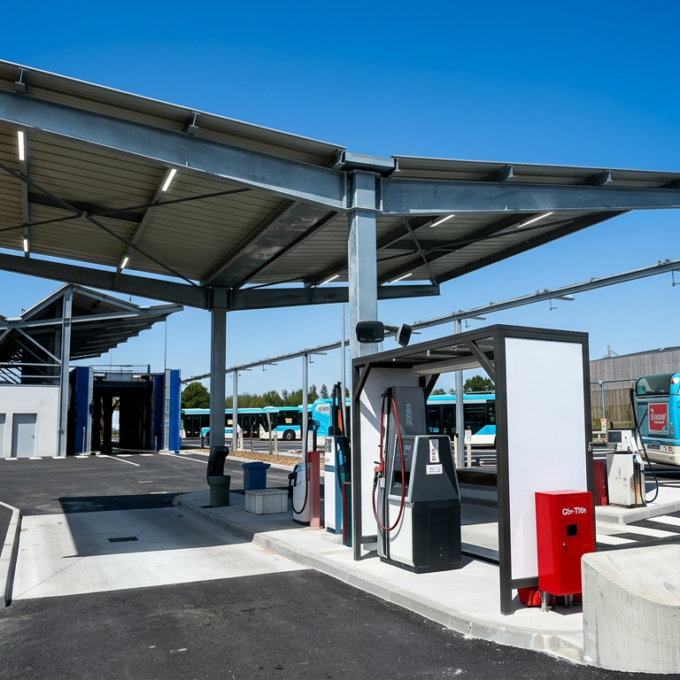
As part of the development of its bus depot and energy infrastructure, the TANLIB public transport network in Niort has commissioned TSG to design, build and expand its bioCNG station, which will supply its fleet of vehicles. To be rolled out in two phases, in 2023 and then in 2026, this project demonstrates TSG’s expertise in the construction of gas compression, storage and distribution infrastructure for public transport fleets.
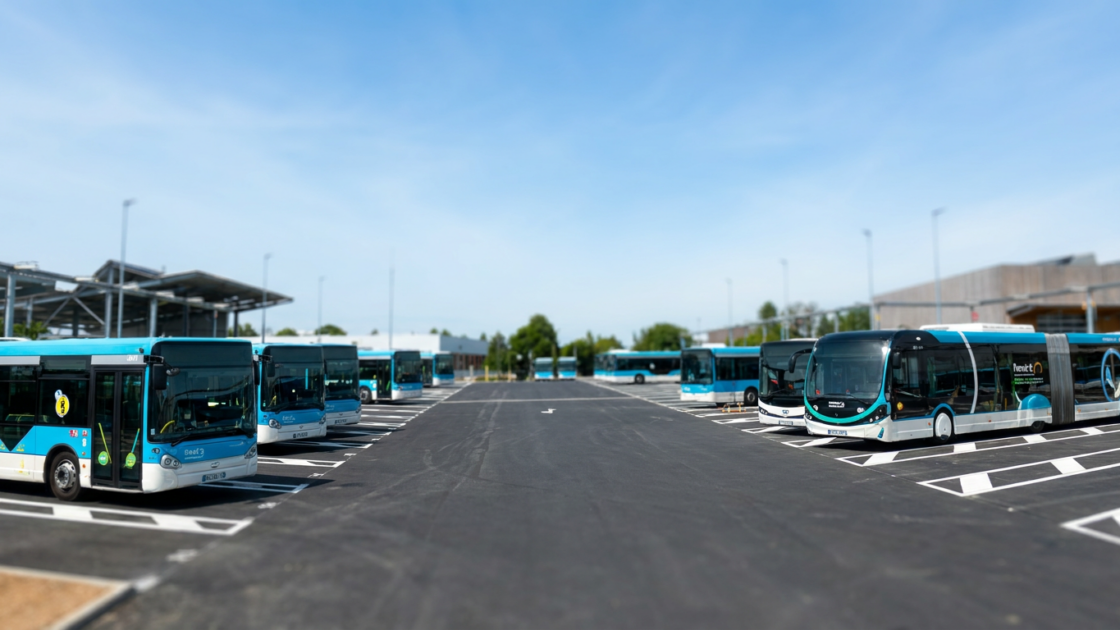
TANLIB bioCNG station: a scalable refuelling infrastructure for public transport
TSG is building a bioCNG filling station to support the expansion of the TANLIB network
A bioCNG filling station designed to meet current and future needs
The first phase of the project, which came into operation in April 2023, involved constructing a complete station incorporating all the equipment required for refuelling vehicles:
- Technical and regulatory studies
- Construction of medium- and high-pressure gas networks
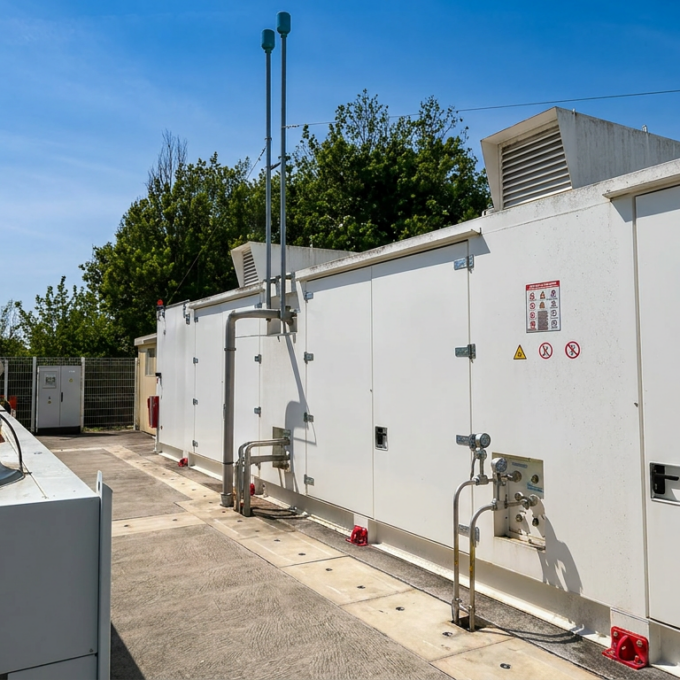
- Installation of two 467 Nm³/h compressors, with provision for a third compressor
- Installation of a gas supply safety and treatment system
- Installation of a Wayne Helix 6000 fast-charging dispenser
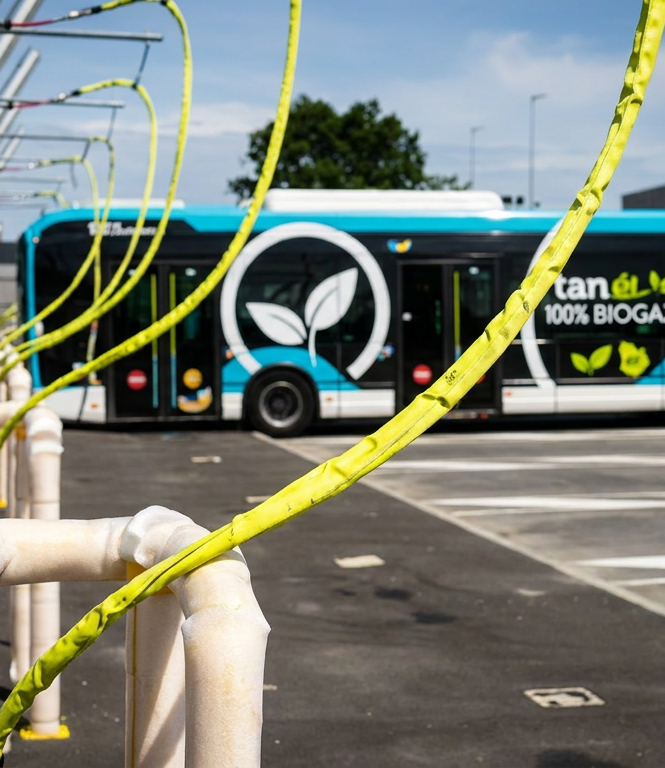
- Deployment of 10 slow-charging points on overhead arms
- Commissioning of the facility
- Training of operational teams
- Remote monitoring and maintenance 24 hours a day, 7 days a week
The infrastructure was designed from the outset to allow for a gradual increase in the depot’s capacity.
An extension carried out whilst business continued as normal
To support the expansion of the vehicle fleet, TSG carried out a second phase of works in 2026 without interrupting the site’s operations. This approach ensures that the TANLIB network has a scalable infrastructure suited to its future needs.
This extension has enabled:
- The relocation of the fast-refilling station
- The addition of three slow-refilling gantries
- An increase in the total slow-refilling capacity from 10 to 54 bays
- The gradual installation of new refilling points
- Preparations for future upgrades to the facility
This project has provided us with a refuelling infrastructure capable of supporting the growth of our fleet. The solution implemented by TSG meets our operational needs whilst offering the flexibility required to anticipate future developments in the network. The fact that the work was carried out whilst operations continued was also a key strength of the project, minimising the impact on our day-to-day activities.
Key infrastructure figures
What are the benefits for bus fleet operators?
As a guide, the average annual mileage covered by a bus in France is 40,421 km/year, according to data from the Ministry of Ecological Transition’s Data and Statistical Studies Service (SDES). On this basis, an infrastructure capable of refuelling 54 vehicles could represent up to 2.18 million kilometres travelled per year. According to benchmark data from the public transport sector, a fleet running on bioCNG can generate energy cost savings of up to 21 per cent compared with an equivalent diesel fleet. This estimate is based on average consumption figures and market energy prices and must be adjusted to reflect the actual operating conditions of the network.
TSG’s expertise in support of bioCNG infrastructure
From regulatory assessments to facility maintenance, TSG supports local authorities, transport network operators and fleet managers in the development of their gas distribution infrastructure.
This project for TANLIB demonstrates TSG’s ability to design scalable CNG stations that are tailored to the operational constraints of public transport depots and capable of supporting the development of alternative mobility solutions.